
As women, our pelvic floor does an incredible amount of work — supporting our organs, controlling bladder and bowel function, and playing a key role in intimacy and core stability. Yet most of us only think about it when something goes wrong.
Whether you’re a new mum, navigating menopause, or simply noticing changes in your body, understanding your pelvic floor is one of the best things you can do for your long-term health and confidence.
At The Effortless Clinic in Canberra, we’ve helped hundreds of local women restore their pelvic floor strength. This ultimate guide brings together everything you need to know — from symptoms and causes to the most effective modern treatments.
1. What is the Pelvic Floor and Why Does It Matter?
Your pelvic floor is a group of muscles, ligaments, and connective tissues that stretch like a hammock across the base of your pelvis. It supports your bladder, uterus, and bowel.
When strong, it helps you:
- Stay continent (no leaks)
- Enjoy better intimacy
- Maintain core stability and good posture
- Recover faster after childbirth
- Feel confident and in control of your body
When weak, everyday activities can become stressful or embarrassing.
2. Common Signs of Pelvic Floor Dysfunction
Many women live with symptoms for years before realising they’re connected. Look out for:
- Leaking urine when coughing, sneezing, laughing, or exercising
- Sudden strong urges to urinate
- Feeling of heaviness, pressure, or “something falling” in the pelvis
- Difficulty controlling wind or bowel movements
- Lower back pain or poor core strength
- Reduced sensation or discomfort during intimacy
- Still looking pregnant months/years after birth (often linked to diastasis recti)
If you recognise any of these, you’re not alone — and help is available.
3. What Causes Pelvic Floor Weakness?
The most common causes in women include:
- Pregnancy and vaginal birth (biggest risk factor)
- Caesarean births (due to pregnancy weight and hormones)
- Menopause and perimenopause (drop in oestrogen)
- Chronic constipation or straining
- High-impact exercise or heavy lifting
- Ageing and natural loss of muscle tone
- Previous pelvic surgery
4. Traditional Solutions vs Modern Treatments
Kegel Exercises
Helpful when done correctly, but studies show up to 50% of women do them wrong, and they often aren’t enough for significant weakness.
Physiotherapy
Excellent, but can require many sessions and ongoing maintenance.
Surgery
Effective in severe cases but involves risks, recovery time, and is usually a last resort.
Modern Non-Invasive Option: Emsella
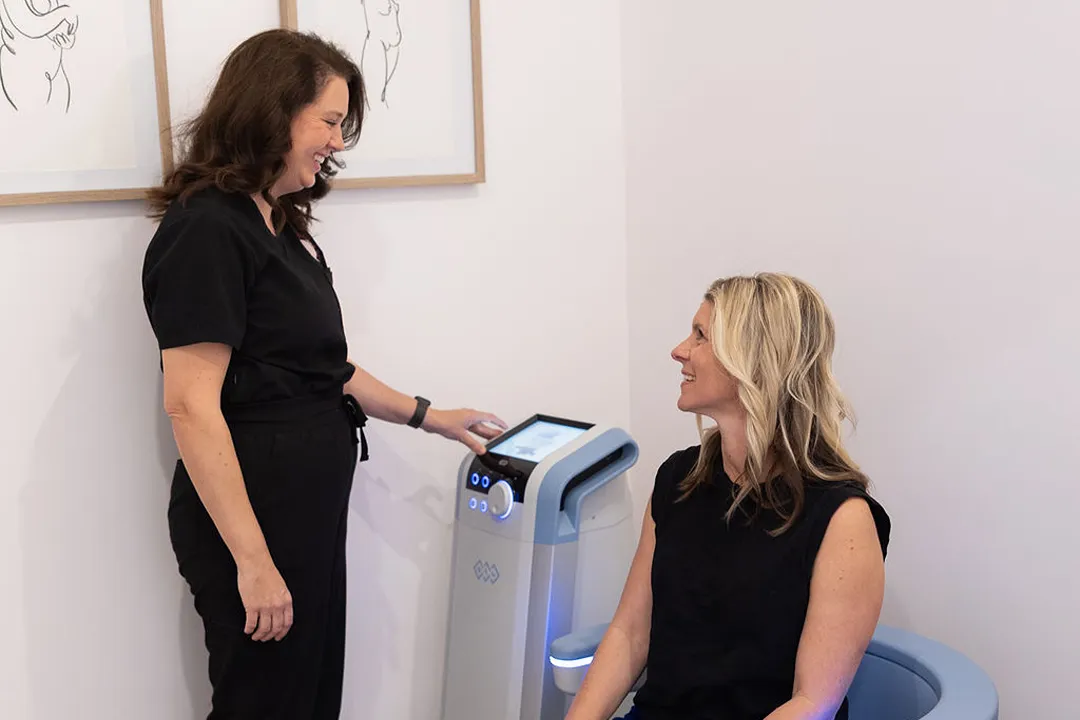
This is where real change happens. Emsella uses High-Intensity Focused Electromagnetic (HIFEM) technology to deliver thousands of supramaximal contractions in a single 28-minute session while you sit fully clothed.
5. How Emsella Works – The Effortless Breakthrough
Emsella uses HIFEM energy to stimulate your entire pelvic floor. In one session you get the equivalent of approximately 11,000 Kegel exercises — far more than you could achieve manually.
Treatment Experience:
- Fully clothed (no undressing)
- 28 minutes per session
- Feels like an intense but comfortable workout
- Zero downtime — return to work or pick up the kids straight after
Most women do a course of 6 treatments over 3 weeks for optimal results. Many combine it with Emsculpt for full core and pelvic restoration.
6. Who Can Benefit from Pelvic Floor Treatment?
Emsella is ideal for:
- Postpartum mums (6+ weeks after birth)
- Women in perimenopause or menopause
- Anyone experiencing incontinence or prolapse symptoms
- Women wanting to strengthen their core without surgery
- Busy professionals who can’t commit to long exercise routines
7. What Results Can You Expect?
Clinical studies and our client feedback show:
- Significant reduction or elimination of leaks
- Stronger core and better posture
- Improved intimate sensation and confidence
- Greater overall quality of life
Results often appear within the first few sessions and continue improving for weeks after treatment.
8. Frequently Asked Questions
Is Emsella safe?
Yes — it is TGA-approved and has an excellent safety profile.
Does it hurt?
Most women find it comfortable. You’ll feel strong muscle contractions, but it’s not painful.
How many sessions will I need?
Most women see great results with 6 sessions.
Can I do it if I’ve had a C-section?
Yes, absolutely.
Is it covered by health insurance?
Some private health funds offer rebates — we can provide the necessary documentation.
9. Ready to Strengthen Your Pelvic Floor?
You don’t have to accept leaks, weakness, or discomfort as your new normal.
At The Effortless Clinic in Gungahlin, Canberra, we provide a warm, private, and supportive environment where your concerns are truly heard.
Book your free 15-minute consultation today. We’ll take the time to understand your situation and create a personalised pelvic floor health plan that fits your life.
Your stronger, more confident self is waiting — and it can be easier than you think.
Book Your Free Consultation